
Westkapelle
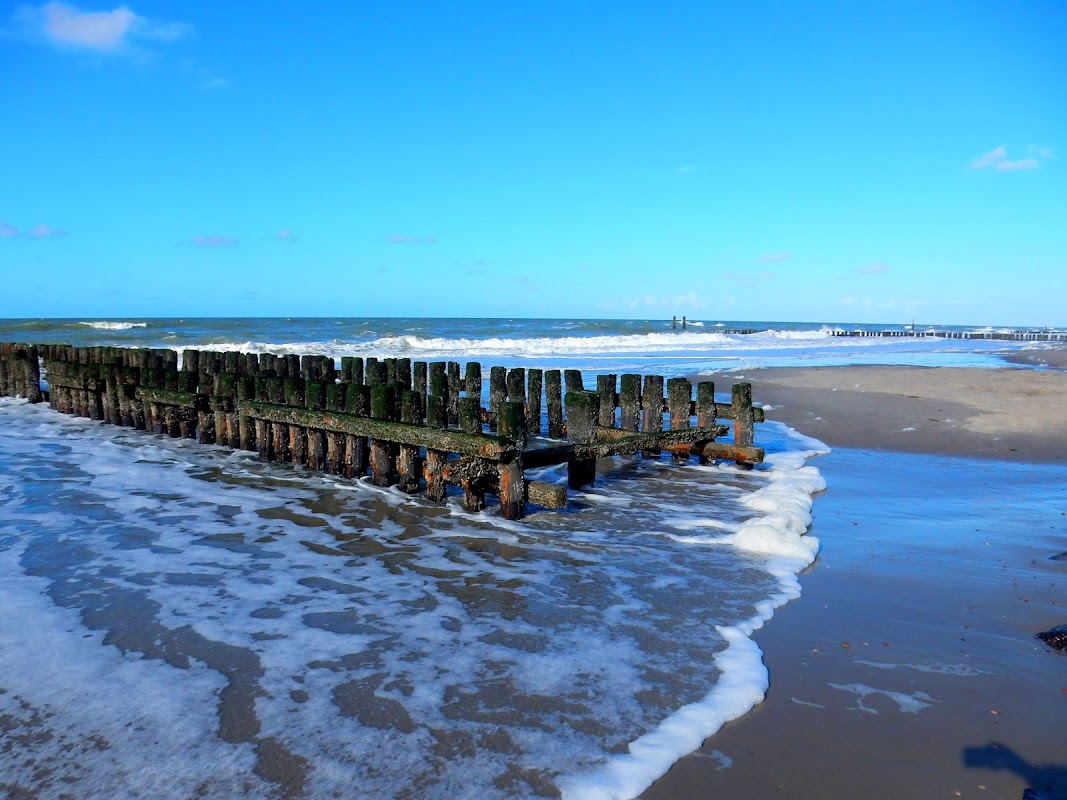
Photos from Google
Two lighthouses mark Westkapelle: the Hoge Licht in the village, a converted church tower, and the Noorderhoofd on the sea dyke. That dyke is itself a striking feature. Westkapelle lies behind the highest and heaviest sea dyke in the Netherlands, built after the line of dunes here was found to be missing and the hinterland proved vulnerable.
- Beach clubs
- 3
- Avg. rating
- 4.4 / 5
- Nearest station
- Middelburg (15.5 km)
Blue Flag beach 2026
What is the Blue Flag?
The village belongs to the municipality of Veere, on the south-western tip of Walcheren. The beach stretches along the dyke and continues northwards into the beaches of Domburg, which lies less than two kilometres away. Zoutelande follows at almost four kilometres, Oostkapelle at just over six.
Two beach clubs stand on the beach. They maintain an average rating of 4.5 out of 5. The atmosphere shifts from relaxed to lively, depending on the season and the time of day. The menu runs from brunch and lunch to dinner, so you can drop in both during the day and in the evening.
Westkapelle draws a mixed crowd. Surfers and kitesurfers come for the wind and the open setting on the North Sea, walkers follow the dyke and the beach, and families opt for the wide sandy beach. The combination of sea, dyke and the two lighthouses gives the village a character of its own that differs from the seaside resorts further along.
The beach is wide and slopes gently, which makes it suitable for families with children. At the beach clubs you can stop for a drink or a meal without having to walk far. The setting against the dyke also means the village buildings are close by, with shops and places to eat and drink within walking distance of the beach.
If you come by car, you will find parking within walking distance of the beach. Part of it is paid parking. You will find the exact rates and locations in the parking overview on this page. By public transport Westkapelle is less directly reachable: the nearest station is Middelburg, just over eleven kilometres away, from where you continue by bus.
The history of Westkapelle is bound up with the Second World War. In October 1944 the sea dyke was bombed to flood Walcheren and weaken the German defences. The village suffered heavy damage in the process. On the dyke, a monument and a tank on display recall these events. It makes a walk along the dyke more than just a view of the sea.
For dogs, the rules of the municipality of Veere for the other beaches apply in Westkapelle. You can read more about this below. If you combine the beach with a day out, Domburg and Zoutelande are close enough to reach within a short drive or a brisk walk.
Great for
The beach at Westkapelle is wide and slopes gently, which makes it easy to keep an eye on children. The two beach clubs lie close to the sand, so you do not have to walk far for a drink or a bite to eat. The village lies behind the dyke, with shops and places to eat and drink within walking distance. That makes it practical for a day with the family.
Dogs are welcome at several beach clubs. On the beach itself, the rules of the municipality of Veere for the other beaches apply. During the summer months dogs must be on a short lead during the day, and off the lead outside those hours. The details are below under the beach zones.
The beach clubs also serve dinner in the evening, with a view of the sea and the sunset on the western side of Walcheren. The average rating of 4.5 out of 5 points to a well-kept kitchen. The two lighthouses and the dyke give the view a recognisable backdrop.
During the day you can stop at both beach clubs for brunch and lunch. The menu runs from a light meal to a more extensive choice. The setting right by the beach makes it easy to break up a walk along the dyke.
The combination of beach, sea and wind makes Westkapelle suitable for an active day, for example around surfing or a walk along the dyke. The beach clubs offer space to sit back with the group afterwards. The open setting on the North Sea offers possibilities for water sports for groups.
When it is windy and wet, the sea dyke with the two lighthouses and the war monument gives you a reason to head out all the same. The beach clubs are a place to warm up indoors. Domburg is a short distance away for more covered facilities and shops.
Season & atmosphere
In the summer months Westkapelle is at its busiest. The wide beach, the two beach clubs and the closeness of Domburg draw plenty of day visitors and holidaymakers then. The atmosphere is lively during this period, especially on warm days.
The setting on the open North Sea makes the village appealing to surfers and kitesurfers. Wind is often present here, which also draws water-sports enthusiasts in the early and late season. Outside the summer it is quieter and the emphasis shifts more towards walking along the dyke and the beach.
The bathing season runs from 1 May to 15 September. During this period the stricter dog rules apply and the crowds are largest. Outside it, the beach is quieter and dogs have more freedom.
The sea dyke is a recognisable feature all year round. The monument and the tank on the dyke recall the events of 1944 and make a walk worthwhile throughout the year, whatever the weather.
If you want to avoid the crowds, you are best off choosing the edges of the season, or the early morning and the evening. The beach is quieter then and parking pressure is lower.
Practical
Westkapelle is easiest to reach by car. There is parking within walking distance of the beach, part of which is paid. Check the current rates and locations in the parking overview on this page.
By public transport you travel via Middelburg station, just over eleven kilometres away. From there the bus runs towards Westkapelle. Bear in mind that the frequency can be lower outside the season.
The setting on the open North Sea means it is often windy here. Bring a windbreaker on cooler days, even in summer. For surfers and kitesurfers that same wind is an advantage.
Combine a visit to the beach with a walk along the sea dyke. The war monument, the tank and the two lighthouses lie a short distance apart and give a sense of the village's history.
Domburg is less than two kilometres away and Zoutelande almost four. Both combine well with a day in Westkapelle, on foot along the beach or with a short drive.
Before a visit with your dog, check the rules in force, as they vary by time of year.
Nearest station: Middelburg Plan your journey →
From Middelburg station it is ±15,5 km on foot to the beach (±183 min). A bus or car gets you there faster.Beach rules & zones
The beach at Westkapelle falls under the rule for the other beaches of the municipality of Veere. During the bathing season, from 1 May to 15 September, dogs are allowed between 10.00 and 19.00, provided they are on a lead. The lead may be no more than 1.50 metres long.
Before 10.00 and after 19.00 dogs may run off the lead during this period. Outside the bathing season, that is from 16 September to 30 April, there is no requirement to keep dogs on a lead and they may run free all day.
The beach itself is wide and stretches along the sea dyke. The open setting on the North Sea makes it suitable for water sports such as surfing and kitesurfing, especially when it is windy.
Bear in mind that dog rules can differ from one municipality to another and may be adjusted over time. Check the current rules with the municipality of Veere before you head to the beach with your dog.
Horse riding on the beach
During the bathing season (1 May to 15 September inclusive), horses are prohibited on all beaches in the municipality of Veere between 10.00 and 19.00. Outside that window and outside the bathing season, horse-riding is permitted. There is a duty to clear up manure; a bridle path network runs across the beaches.
Parking
3 marked as paid, 8 with no fee info. Tap a pin for the name and directions.
Parking payment details come from OpenStreetMap and may be incomplete. Please check locally.
Nearby seaside resorts
Last updated: 23 June 2026