
De Cocksdorp
Photos from Google
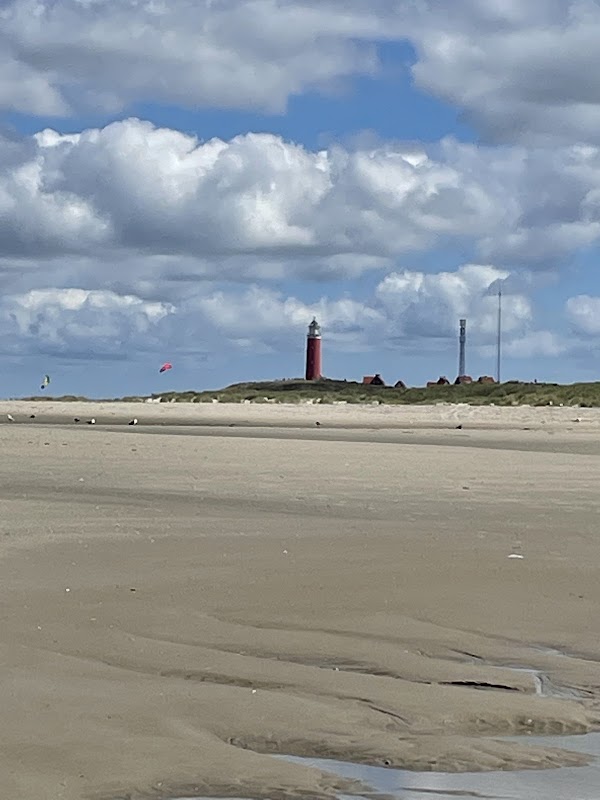
The Eierland lighthouse marks the northern tip of Texel, a few minutes' drive from De Cocksdorp. The village has around 1,200 inhabitants and is the most northerly community on the island. From here the beach runs all the way to the point where the North Sea and the Marsdiep meet.
- Beach clubs
- 1
- Avg. rating
- 4.0 / 5
The history of De Cocksdorp is young compared with Texel's older villages. In 1836 it had 323 inhabitants; the village came into being after the Eierland lands were reclaimed. You can still see that origin in the straight roads and the open layout around the main street.
The beach at De Cocksdorp is wide and quiet. The distance from the busier beaches near De Koog means it stays less crowded here even in high season. The walk to the northern tip is a fixture for anyone staying here: it is one of the few places on the Dutch coast where you can watch the sandy beach merge into the mouth of the Marsdiep.
There is one beach club on this beach, with an average rating of 4.0 out of 5. The menu focuses on dinner, so for lunch or a simple snack along the way you are better off bringing something yourself or heading into the village. For a meal at the end of the day, with a sea view, the beach club is the place to go.
De Cocksdorp lends itself well to a quiet beach holiday. The village lies away from the tourist bustle, but has enough amenities for everyday shopping. If you want to explore the island further, De Koog is a little over ten kilometres away and the other Texel villages are also within easy reach.
Texel can only be reached by ferry; the boat sails from Den Helder to 't Horntje on the south side of the island. From the landing point it is about half an hour's drive to De Cocksdorp. The nearest railway station is Den Helder, across the Marsdiep. A car or bicycle on the island is therefore practical.
Besides the beach, the surrounding area appeals to birdwatchers and walkers. The De Slufter nature reserve lies between De Cocksdorp and De Koog and is one of Texel's best-known landscapes. The beach itself is wide enough for anyone wanting space, and the northern tip draws those who love the view over the tidal inlets.
Great for
The beach at De Cocksdorp is wide and slopes gently, with room to play without it filling up quickly. The distance from the busier beaches makes it quieter than at De Koog. Bear in mind that there is one beach club with a dinner menu, so bring your own snacks for along the way.
Texel works with island-wide zoning rather than separate dog-friendly beaches. Outside the breeding season, dogs may run off the lead on various stretches of beach under proper supervision; on supervised stretches and naturist beaches they must be kept on the lead. In the dune and nature zones, dogs must be kept on the lead during the breeding season, from 1 March to 1 September. Check the signs at the beach access points and the current rules with the municipality of Texel.
The beach club focuses on dinner and looks out over the North Sea at the island's northern tip. The average rating is 4.0 out of 5. The calm along this part of the coast and the view of the sunset make it well suited to an evening for two.
The beach club's menu is geared towards dinner, not lunch. For a midday meal by the sea, De Cocksdorp is therefore less of an obvious choice. If you are on the beach here all day, you are better off bringing something yourself or picking something up in the village.
For a group seeking peace and space, the northern part of Texel offers a secluded spot with one beach club for dinner. The combination with the northern tip, the lighthouse and the De Slufter nature reserve makes an active programme possible. For larger groups, arrange the options with the beach club in advance.
In rain or strong wind, De Cocksdorp itself offers little covered entertainment. The village has basic amenities, but for indoor activities you will need to head elsewhere on the island. The Eierland lighthouse can be climbed when visibility is good and gives a view over the northern tip. Den Burg, Texel's main village, is a short drive away for shops and museums.
Season & atmosphere
In high season, from July through August, Texel is at its busiest. De Cocksdorp stays relatively quiet, as it lies away from the tourist hub around De Koog.
The ferry from Den Helder largely sets the rhythm: on summer days and during holiday weeks the crossing can be busy. If you want to keep things calm, travel outside the peak times or in the shoulder seasons.
Spring partly overlaps with the breeding season, which runs from 1 March to 1 September. During that period, stricter rules for dogs apply in the dune and nature zones, and part of the area is less accessible.
De Slufter and the northern tip draw birdwatchers and walkers all year round. In autumn and winter the beach is almost empty, and De Cocksdorp is mainly a base for walks along the coast.
For current events on the island, your best source is the municipality of Texel. The seasonal pattern on the beach largely follows the school holidays and the weather.
Practical
Texel can only be reached by ferry. The boat sails from Den Helder to 't Horntje; from there it is about half an hour's drive to De Cocksdorp on the north side.
The nearest railway station is Den Helder, across the Marsdiep. If you travel by public transport, count on combining train, ferry and bus.
A bicycle is practical on Texel: the island has an extensive cycle network and the distances between the villages are easy to cover. From De Cocksdorp it is a little over ten kilometres' ride to De Koog.
At De Cocksdorp there is parking within walking distance of the beach, partly paid. You will find the exact rates and locations in the parking overview on this page.
There is one beach club, focused on dinner. For lunch or snacks, bring something yourself or pick something up in the village. Allow for the wind at the northern tip, and even in sunny weather take a windbreak or an extra layer.
If you want to visit the Eierland lighthouse or the De Slufter nature reserve, check the opening hours and accessibility in advance, especially during the breeding season.
Nearest station: Den Helder Plan your journey →
Beach rules & zones
Texel uses island-wide zoning for dogs rather than separate dog-friendly beaches. On the supervised stretches of beach and the naturist beaches, dogs must be kept on the lead; this is shown on signs at the beach access points.
Outside the breeding season, dogs may run off the lead on other stretches of beach, provided they are properly supervised. In the dune and nature zones, dogs must be kept on the lead during the breeding season, which runs from 1 March to 1 September.
The supervised beach access points are at De Koog, around markers 17 to 21, at a distance from De Cocksdorp. For the exact rules at each location, consult the signs on site and the municipality of Texel.
What makes this part of the coast special is the northern tip, where the beach merges into the mouth of the Marsdiep. Between De Cocksdorp and De Koog lies the De Slufter nature reserve, a salt-water tidal area with its own access rules. The beach at De Cocksdorp itself is wide and generally quieter than the beaches further south.
Horse riding on the beach
On Texel, horse-riding (and driving horse-drawn vehicles) is permitted from 1 May to 1 October on the beach from sunrise to 10.00 and from 19.00 to sunset, only in the areas designated as recreational and sporting beach. From 1 October to 1 May it is allowed on the entire beach.
Naturism
This resort has a designated or marked nudist beach. The designated zone is located near beach posts 26-27 on Texel.
Parking
5 marked as paid, 17 with no fee info. Tap a pin for the name and directions.
Parking payment details come from OpenStreetMap and may be incomplete. Please check locally.
Nearby seaside resorts
Last updated: 23 June 2026